
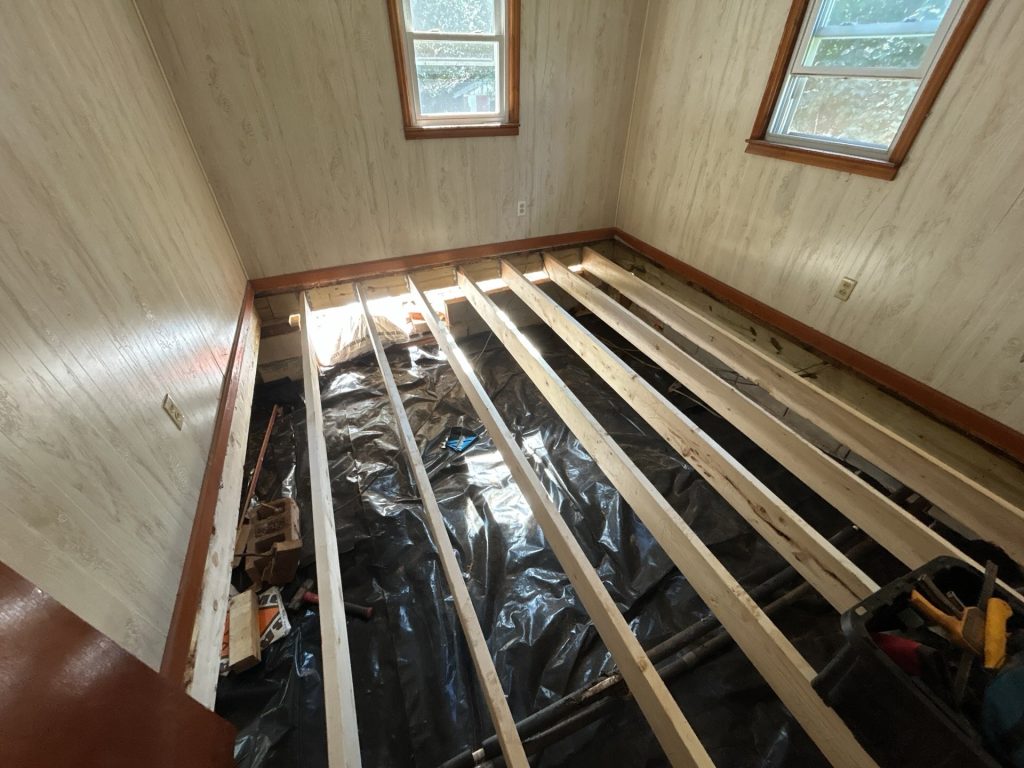
Crawlspace Framing Repair: Sill Plates, Rim/Band Joists, Floor Joists & Girders
Most of the Upstate’s older housing sits over a crawlspace, and most of those crawlspaces were built before anyone gave much thought to moisture. The mill village houses went up on stone and brick piers with the floor framing set close to grade. The postwar neighborhoods that followed traded those for block piers but kept the same low clearance. Both are still standing. Both are why we spend most weeks of the year under houses.
Floor framing is the part of a house nobody thinks about until it moves. When sill plates, rim and band joists, floor joists or girders lose capacity — to moisture, wood rot, termites, powder post beetles, or decades of load on lumber that was never sized for it — it shows up upstairs: a floor that gives underfoot, a slope across a room, a door that stops latching, a crack that opens above a doorway.
We repair and replace those components. We also fix what caused the movement. Replacing a rotted sill plate without addressing the water that rotted it buys a few years, not a repair.
Get Your Free Estimate
Tell us what you’re seeing. We’ll call to set up a free inspection.
What Are You Noticing?
Soft, Spongy Floors
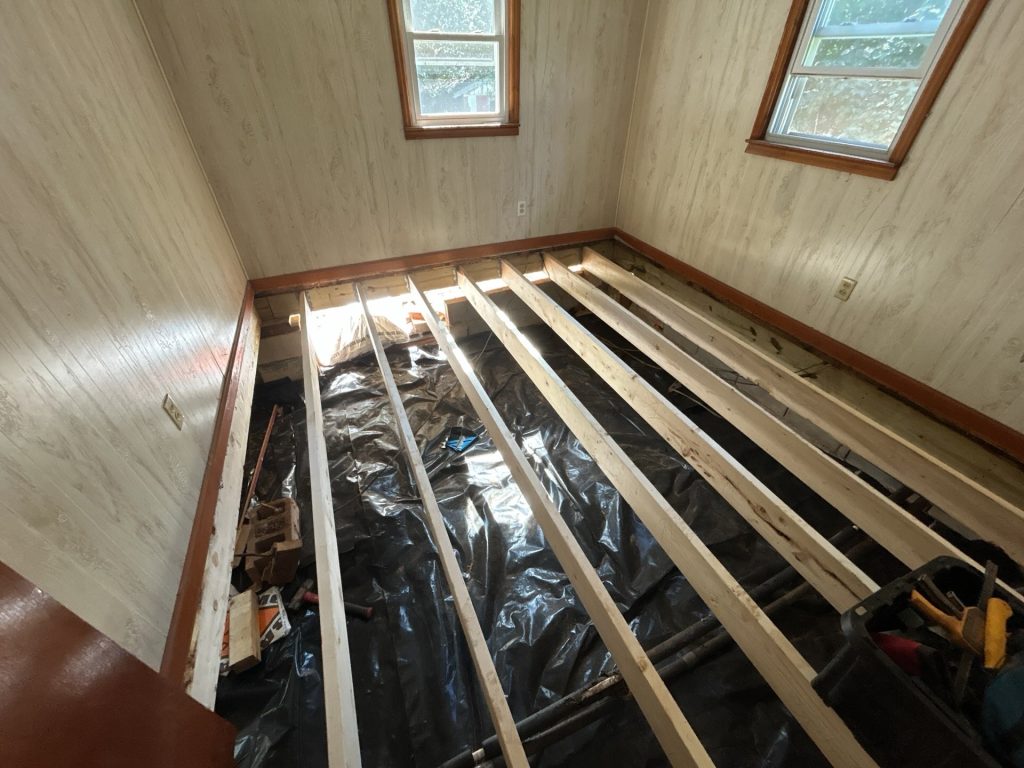
Worst near bathrooms, exterior doors, and anywhere the crawlspace stays damp. The subfloor and the joists under it tend to give up together.
Floor Joists >
Bouncy, Springy Floors
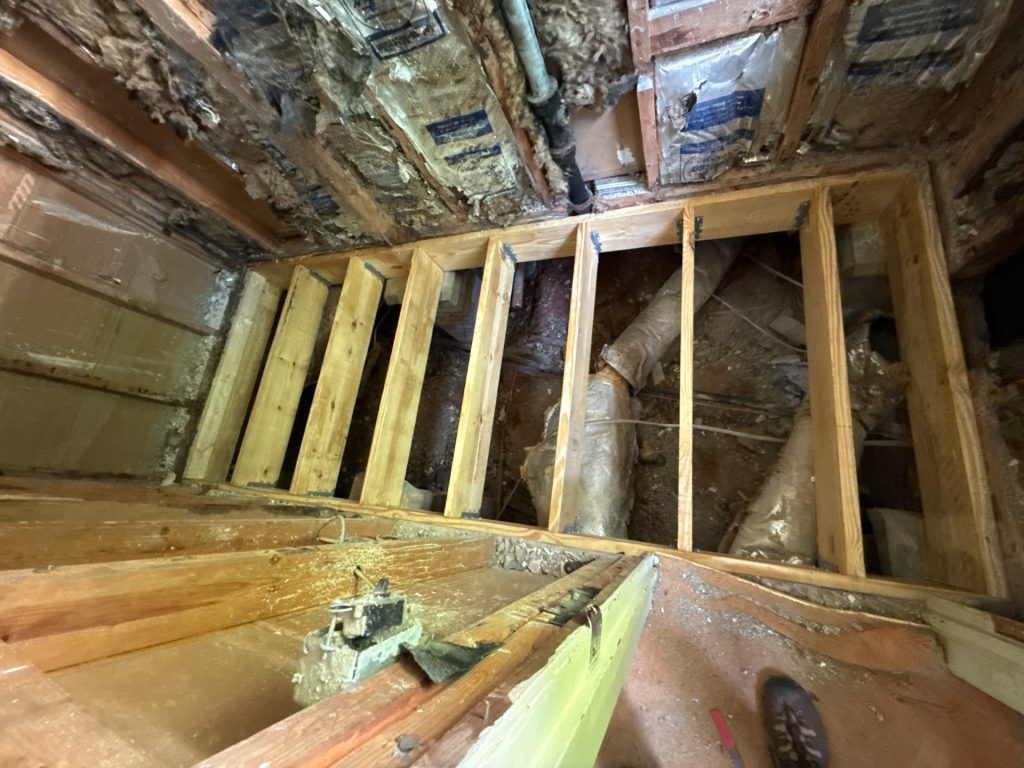
Common in older mill houses, where joists span farther than current framing would allow, and in rooms where an original pier was pulled out and never replaced.
Floor Joists >
Uneven, Sloping Floors
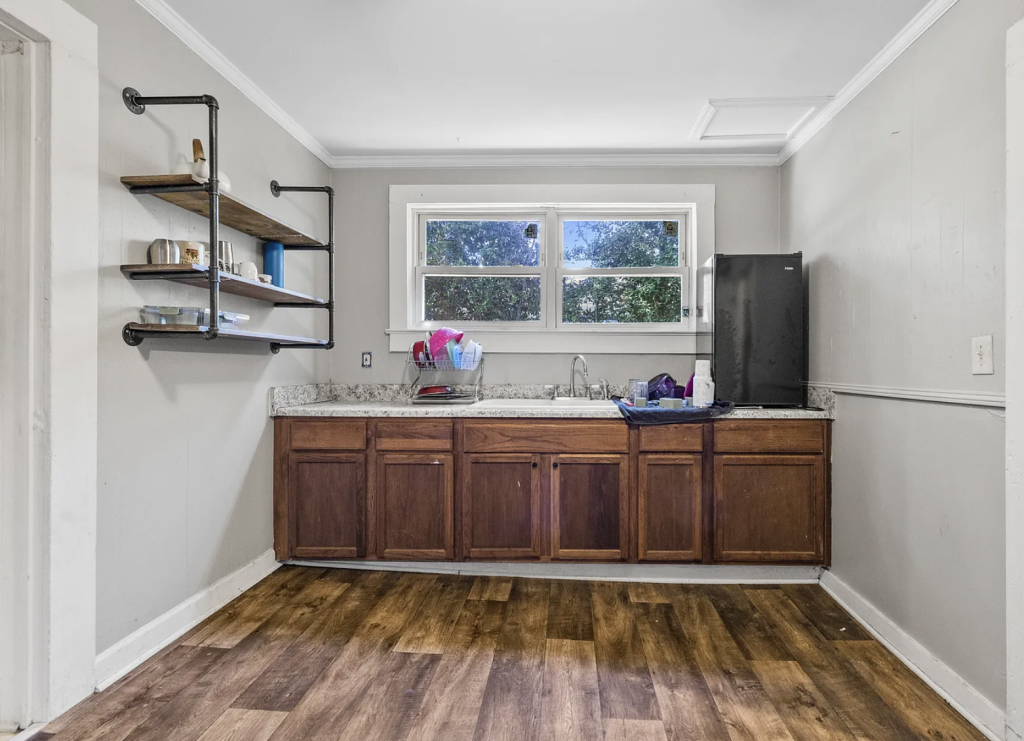
A slope running the length of a room usually starts at a girder or the piers carrying it, not at the joists themselves.
Girders & Beams >
Doors Sticking / New Interior Cracks
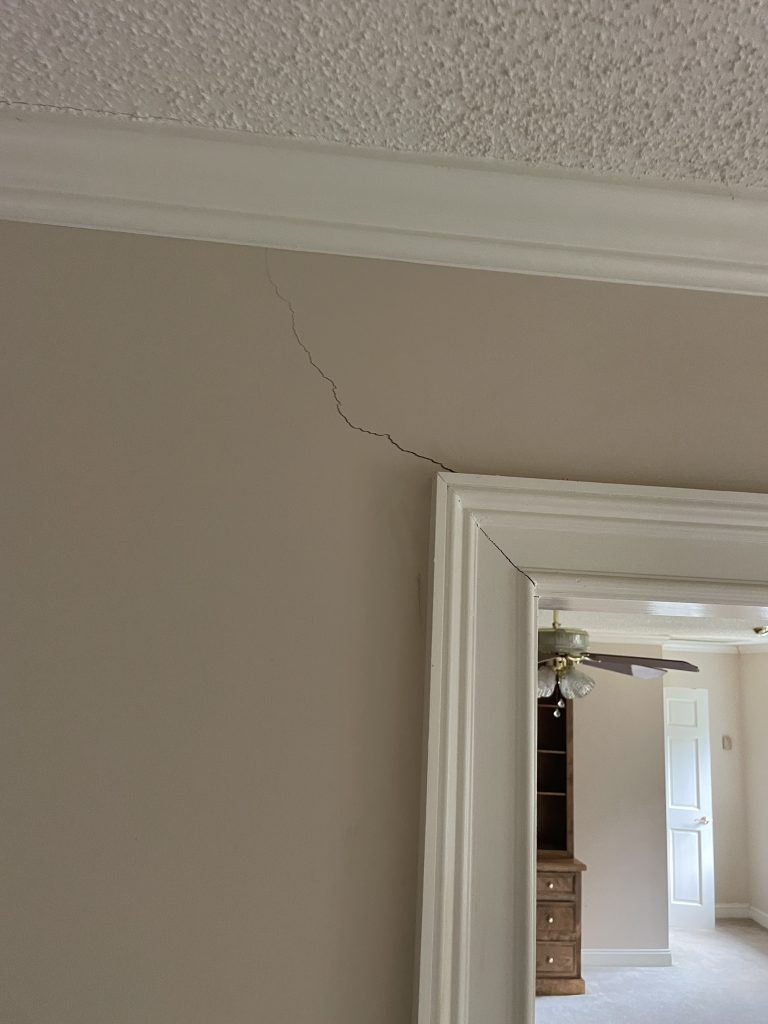
The floor frame moves first. The walls and door openings sitting on it move second, which is why the symptom shows up a long way from the cause.
Repair Options >
Visible Rot or Damaged Wood
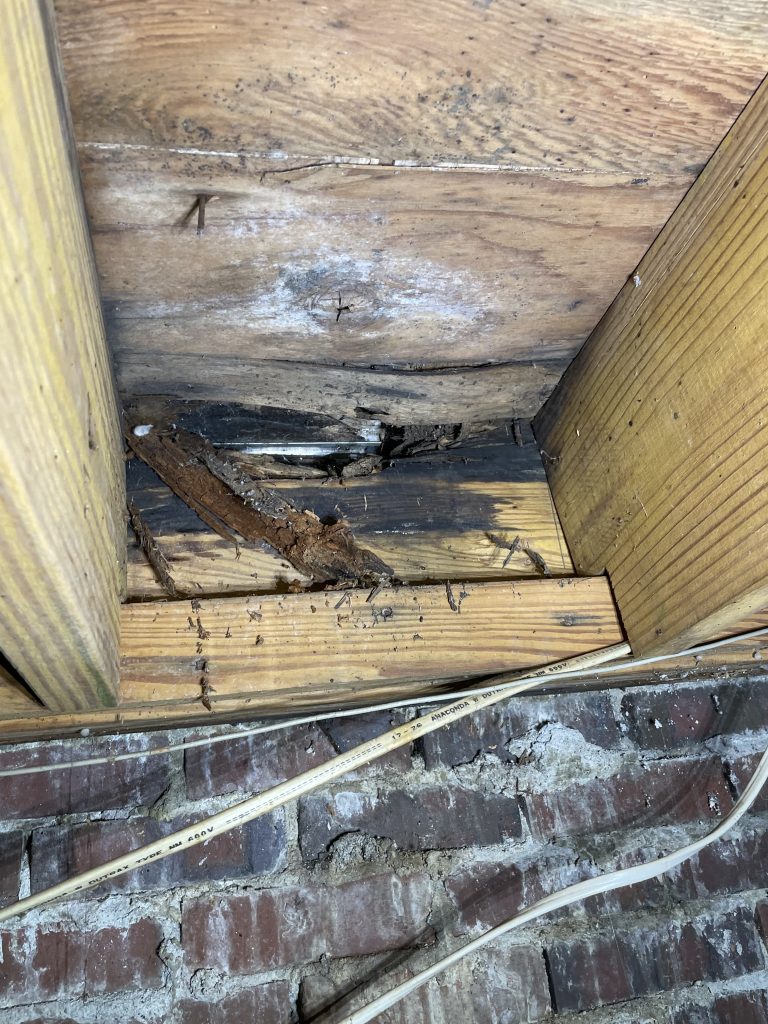
Dark, crumbling, or spongy wood at the sill plate or band joist. Ground moisture is the usual source, though a long-running plumbing leak looks much the same.
Wood Rot Repair >
Termite Damage / Mud Tubes
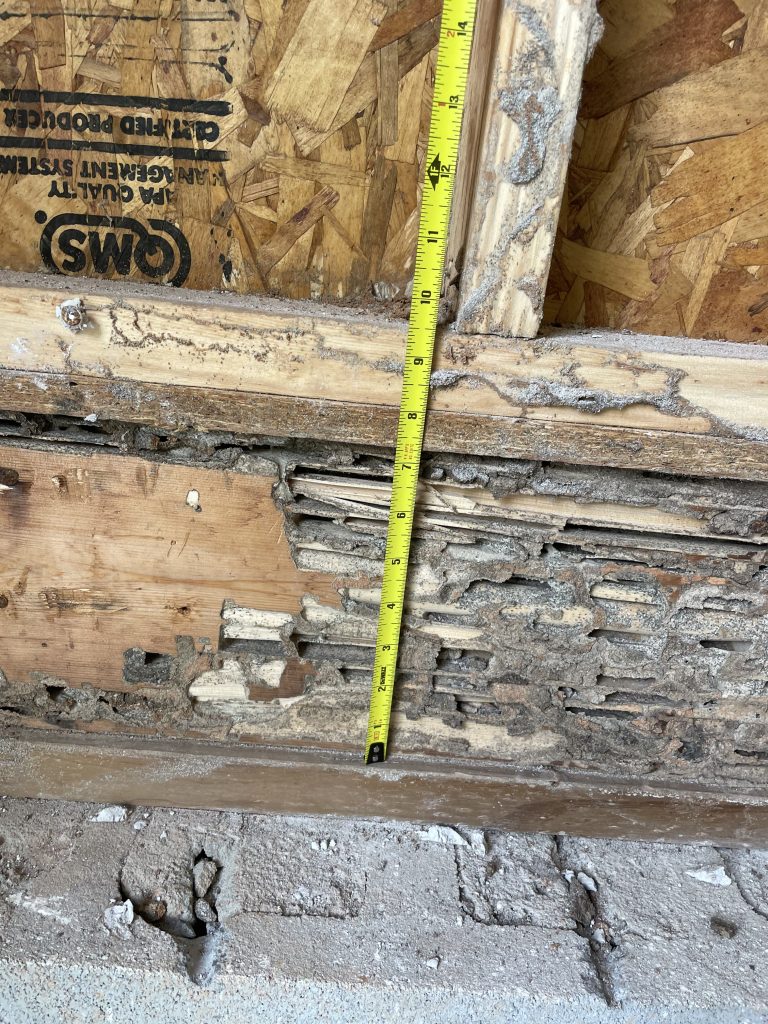
Mud tubes running up a pier or foundation wall. Termites work from the inside out, so framing can look sound until someone probes it.
Termite Damage Repair >
Framing Parts We Repair (Spoiler Alert, It’s Everything)
Sill Plate Replacement
Learn more about our sill plate repair >
Rim / Band Joist Repair
Learn more about our band & joist repair >
Floor Joist Repair
Learn more about our floor joist repair >
Girders / Support Beam Repair
Learn more about our girder/beam repair >
The Floor Framing System (Plain-Language Overview)
Framing components go by different names depending on region, contractor, and the era the home was built. If you’ve heard different terms from different people, that’s normal. The framing under your home builds up in layers, starting where wood meets masonry and working upward. Damage to one component often affects everything above it, because the floor system works as a unit.
What We Find Under Upstate Homes
Crawlspace framing problems in the Upstate sort fairly neatly by when the house was built.
Mill village housing (roughly 1900—1930). Framing sits on stone or brick piers with very little clearance to grade, so sill plates and band joists take the moisture first. Joist spans were set by the lumber on hand rather than a span table, which means some of the bounce in these houses was there from the start. It just got worse.
Block-pier crawlspaces (roughly 1940s—1960s). Concrete block replaced stone and clearances stayed low. The failures here are usually at the bearing points: mortar breaking down at the top of a pier, shims that compressed or worked loose, girders sitting on piers that have settled at different rates.
Postwar ranches and later subdivisions. Longer, more open floor plans put more load on fewer bearing points. When an interior support gets removed during a remodel — and it happens more than you would think — the slope does not show up for years.
Older homes that were never treated for termites. Subterranean termites are a fact of life in the Upstate, and plenty of older houses went decades without a treatment or an active bond. The damage tends to concentrate where the termites get in: sill plates, band joists, and the first few feet of any joist bearing on masonry.
Powder post beetles in prewar framing. In houses built before the war and earlier, powder post beetles are a regular find — most often where the framing is old-growth lumber. The beetles go for the denser, harder wood, and the fast-grown pine coming out of lumber yards today holds much less interest for them. The giveaway is a scatter of small exit holes with fine powder beneath them, usually in joists and girders. Unlike termites, these beetles can keep reinfesting the same wood as long as the crawlspace stays damp, which is why we treat the moisture as part of the repair rather than a separate job.
Lake and foothills homes. Keowee, Jocassee, Hartwell, and the Cliffs communities. Steep sites mean tall pier and column systems, long runs of exposed framing, and access that can be genuinely difficult. We have reframed the underfloor structure of a home on Lake Jocassee that can only be reached by boat.
Sill Plates (Where Wood Meets Masonry)
The sill plate is a board laid flat on top of masonry wherever wood framing bears on it. At the perimeter of the home, it sits on the foundation wall. At interior masonry piers, it sits between the pier and the girder above. Because masonry can wick and hold moisture, sill plates are required to be pressure-treated where wood bears on masonry. This transition point is one of the most common places we find rot or termite damage.
Why the sill plate matters
- It’s the base transition between masonry and wood framing
- It provides bearing for perimeter framing and/or interior beam supports
- It’s one of the first places moisture-driven deterioration can begin
What happens when the sill plate fails
When a sill plate deteriorates from wood rot or termite damage, it can affect everything above it:
- perimeter framing can lose a stable bearing surface
- the floor edge can begin to shift or drop
- walls above may show signs of movement over time
Common repair: sill plate replacement with proper support during the replacement, and a plan to address the moisture/pest driver that caused the damage.
Rim Joists / Band Joists (Perimeter of the Floor Frame)
Sitting on top of the sill plate at the perimeter is the band, forming the outer edge of the floor system. Floor joists attach to it, and exterior walls are built on top of it—so it plays a major role in transferring load down into the foundation. This member has many names. You may hear it called:
- rim joist
- rim board
- band joist
- header joist
- “band”
Because it sits near the exterior and close to grade in many homes, it is commonly damaged by wood rot and termites.
Why rim/band joists matter
- Supports the ends of floor joists
- Transfers exterior wall loads into the foundation
- Deterioration here can impact both floors and walls
Common rim/band joist repairs
- Supports the ends of floor joists
- Transfers exterior wall loads into the foundation
- Deterioration here can impact both floors and walls
Floor Joists (The “Ribs” of Your Floor)
Floor joists are the most numerous framing members in most crawlspaces. The subfloor, and everything above it, relies on them. Think of joists as the ribs of the floor system. Joists are commonly dimensional lumber (2×8, 2×10, 2×12) or engineered products in newer homes.
Signs joists may be damaged or failing
- bouncy / springy floors
- soft or spongy spots
- unevenness that gets worse over time
- visible damage from rot or termites (when accessible)
Common floor joist repairs
- floor joist repair and reinforcement
- joist sistering (fastening a new joist alongside a compromised one)
- floor joist replacement when damage is severe
- stabilizing the system so movement doesn’t continue
Girders / Support Beams (Primary Interior Support)
A girder is the primary interior beam that supports a large portion of the floor system. It’s typically supported by piers or posts at intervals. Joists may rest on top of it or tie into it from the side. You may also hear this called:
- support beam
- main beam
- carrying beam
- “beam”
Damage to a girder or its support points can affect a large section of the home, often creating wide-area bounce or long slopes.
Signs a girder/support beam issue may be present
- slope or dip across multiple rooms
- widespread bounce (not just one spot)
- progressive movement over time
- visible deterioration at bearing points
Common girder/support beam repairs
- girder repair / reinforcement
- support beam repair
- replacement where needed
- temporary shoring while repairs are completed (case-by-case)
What Damages Crawlspace Framing?
Moisture & Wood Rot
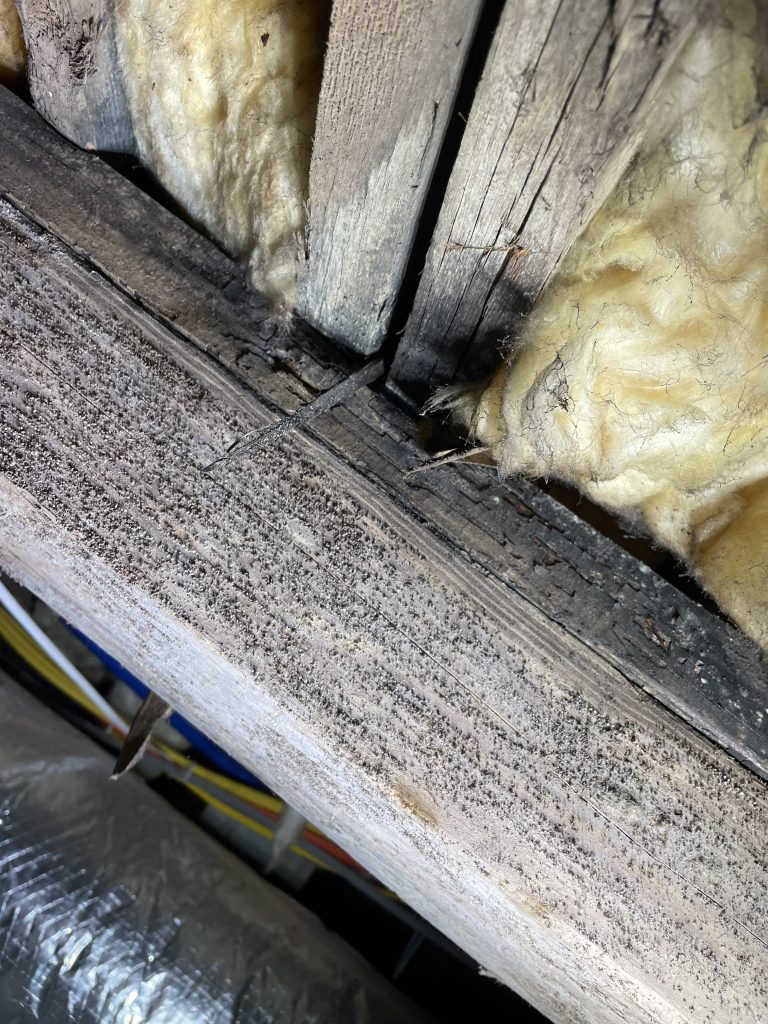
When crawlspace humidity is high or bulk water is present, wood moisture content rises and fungal decay can begin. Over time, wood softens, loses strength, and may fail, especially in areas close to masonry like sill plates.
Learn more about moisture damage >
Insect Damage (Termite Activity)
Termites and other wood-destroying insects can hollow out framing from the inside. Wood may look intact on the surface while losing structural capacity.
In both cases, damage is often hidden until symptoms show up inside the home, one reason crawlspace inspections are so valuable.
Learn more about termite damage >
Can Damaged Framing Be Repaired?
Yes. Sill plates, bands/rim joists, floor joists, and girders can all be repaired or replaced, but the complexity depends on the member involved and the extent of damage.
Common repair approaches (based on what we find)
- Replace compromised lumber that has lost structural integrity
- Sister or reinforce joists when appropriate
- Repair/replace rim or band sections supporting joist ends and wall loads
- Repair or stabilize girders that carry wide areas of the floor system
- Temporary shoring where required to safely perform the repair
Important: the moisture source or pest issue that caused the damage must be addressed, or new lumber is exposed to the same conditions.
How We Work as Your Floor Joist & Framing Repair Contractor
Step 1 – Inspection & Identify
We inspect the crawlspace framing and identify which member is compromised and what load it carries.
Step 2 – Explain The Repair Plan
You get a clear explanation of what’s damaged, what needs repair vs replacement, and what results to expect.
Step 3 – Repair & Stabilize
We complete the framing repair safely and restore structural stability so the symptoms don’t continue.
Crawlspace Framing Repair FAQs
How do I know if I need joist repair or girder repair?
Joist issues are often more localized; girder/support issues typically affect wider areas. We confirm during our free inspection.
Do you replace termite-damaged framing?
Yes. If structural members are compromised, they can be repaired or replaced and stabilized appropriately.
Can framing be repaired without tearing up my floors?
Often, yes. Many repairs are performed from the crawlspace without removing finished flooring.
Do bouncy floors always mean rotted joists?
No. Bounce can come from damaged framing or from missing/insufficient support. An inspection confirms which one is driving the issue.
What is the difference between a rim joist and a band joist?
Most contractors use the terms interchangeably to describe the perimeter framing member at the edge of the floor system.
Serving the Upstate of South Carolina
Foundation and crawl space repair across twelve counties of the Upstate and beyond. Hover a city to see it on the map. Not listed? Call and ask. If we don't cover you, we'll tell you straight.