
Crawlspace Repair
Crawlspace Repair in Upstate South Carolina
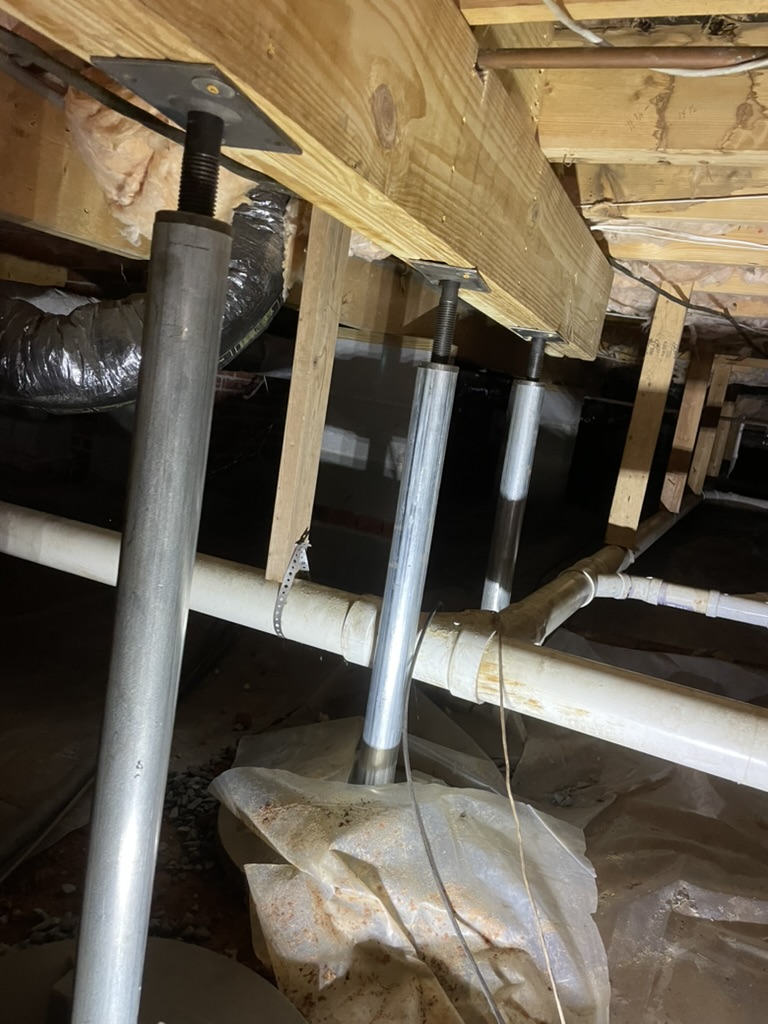
Upstate crawlspaces take a beating. Red clay holds water, summers stay humid, and a lot of homes here sit on framing and block piers that have been under the house for decades. Moisture leads to rot, rot invites termites, and sooner or later the floor above starts to sag or bounce. We handle crawlspace work from the dirt up: framing repair, support jacks and beams, rot and termite damage, and crawlspace encapsulation, across Greenville, Spartanburg, Anderson, and the rest of the Upstate.
Get Your Free Estimate
Tell us what you’re seeing. We’ll call to set up a free inspection.
5 Signs Your Crawlspace Needs Work
Most people don’t go under the house until something upstairs tells them to. These are the crawlspace problems we get called out for most often.
Compromised Framing
Joists, girders, and sill plates in a crawlspace can crack, sag, or rot from long-term moisture, termites, or old repairs that didn’t hold. Soft wood, sistered boards pulling away, or beams resting on stacked blocks are all worth a closer look.
Wall and Door Frame Cracks
Cracks in drywall above doorways, and doors that stick or won’t latch, often trace back to the crawlspace. When the framing below sags or settles, the walls above move with it.
Musty Smells
A musty smell in the house usually starts in the crawlspace. Air from under the house works its way up into the living space, so damp, stale crawlspace air ends up in the rooms you live in.
Bouncy or Sloping Floors
Bouncy, sloping, or dipping floors are one of the most common reasons people call us. It’s usually damaged or undersized framing, a beam that’s lost support, or piers that have settled in the crawlspace.
Moisture and Mold Under the House
Wet insulation hanging from the joists, sweating ductwork, standing water, or mold on the framing all point to a crawlspace moisture problem. Fixing the moisture is what keeps wood repairs from having to be done twice.
Benefits of a Healthy Crawlspace
Good crawlspace work is about more than the wood under your house. A dry, well-supported crawlspace keeps floors level, keeps damp air out of the living space, and keeps small repairs from turning into big ones.
Peace of Mind
Every project is backed by trusted warranties and proven solutions, so you can feel confident your home is safe and secure.
Improved Air Quality
Controlling crawlspace moisture cuts down on mold, musty smells, and the damp air that drifts up into your home.
Prevent Structural Issues
Catching rot, termite damage, and sagging framing early keeps crawlspace repair a small job instead of a full re-frame.
Crawlspace Work We Do
Every crawlspace is different, and the fix has to match what’s actually causing the problem. Most structural crawlspace repairs should be overseen by a licensed builder. Here’s the crawlspace work our crews handle most.
Crawlspace Framing Repair
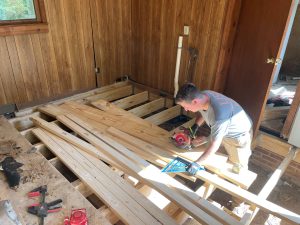
Re-framing is one of the most common crawlspace repairs we make. We replace or sister damaged joists, girders, and sill plates, and correct framing that was undersized from the start. More on crawlspace framing repair.
Crawlspace Encapsulation
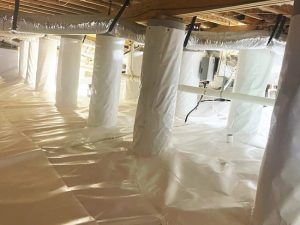
We do encapsulation mostly as the last step of a structural repair. After we fix rotted framing or add support, sealing the crawlspace with a vapor barrier and closed vents keeps the moisture that caused the damage from coming back. A drier crawlspace also means better indoor air and longer life for the ductwork and equipment under your house.
Crawlspace Support Jacks & Beams
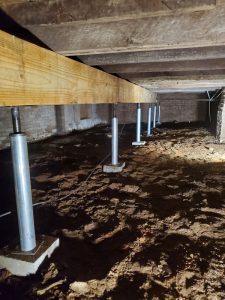
Adjustable steel support jacks on solid footings, paired with new beams where needed, fix a lot of sagging and bouncy floors. They’re one of the most common and cost-effective crawlspace repairs, and they can be adjusted to bring the floor back to level. More on posts, beams, and jacks.
Rot & Termite Damage Repair
Rot and termite damage in a crawlspace is often bigger than it looks from the access door. We open it up, replace what’s damaged, and deal with the moisture that caused it. See dry rot repair and termite damage repair.
Crawlspace Sump Pumps
Crawlspaces that take on water need somewhere for it to go. A sump pump collects water at the low point and pumps it out and away from the house, and it’s often paired with encapsulation.
What Crawlspace Repair Costs
Crawlspace work costs depend on what’s actually under the house, which is why we don’t quote over the phone. These are typical starting points for crawlspace work in the Upstate:
- Single support jack, installed: around $650
- Short support beam: from around $1,400
- Rot or termite damage needing re-framing: from around $3,000
- Sump pump, installed: from around $2,000
Rot and termite repairs have no real upper bound, because a crawlspace can hide a lot of damage. A free on-site inspection is how you get a real number. Our pricing page has more detail.
If you’re not sure what’s going on under your house, give us a call. We’ll go under, look at the whole crawlspace, and tell you straight what needs fixing now and what can wait.
Crawlspace Work FAQs
Regarding encapsulation, doesn’t my house need to breathe?
No! Houses need to dry, not breathe. You need to breathe, and your lungs would prefer clean air.
Do I need a sump pump in my crawlspace?
If your crawlspace shows signs of puddling water, a sump pump can be a big help in getting it out. It’s also a really good idea to have one in an encapsulated crawlspace, since water that gets on top of the liner has nowhere to drain. Some state building codes (like North Carolina’s) even require one in an encapsulated crawlspace so a plumbing leak has a way out. We can check for signs of water intrusion and standing water and help figure out the best way to keep things dry.
Do you do crawlspace encapsulation?
Yes, usually alongside a structural repair. Once the framing and support are fixed, encapsulation keeps moisture from undoing the work. Encapsulation is priced after we see the crawlspace, since height, access, debris, and whether a sump pump is needed all change the cost.
What’s the difference between a vapor barrier and encapsulation?
A vapor barrier is plastic laid over the dirt floor. Encapsulation goes further: the liner is sealed at the seams and edges and the vents are closed off, so the crawlspace is cut off from outside air and moisture.
Should crawlspace vents be open?
Usually not, at least not in the Upstate. In summer, outside air is warm and humid. When it comes through open vents and hits the cooler wood, ductwork, and soil in the crawlspace, the moisture condenses. That’s why so many vented crawlspaces here have damp insulation, sweating ducts, and mold on the framing. Open vents often make a crawlspace wetter, not drier.
Closing the vents only helps if the crawlspace is set up for it: a sealed vapor barrier over the ground, gaps to the outside sealed, and some way to keep the air dry, like a dehumidifier. Closing vents over bare dirt just traps the moisture in. And if a gas furnace or water heater sits in the crawlspace, don’t seal it up without making sure that equipment still gets the combustion air it needs.
What humidity should my crawlspace be?
Ideally under about 60% relative humidity. Above that for weeks at a time, the wood starts soaking up moisture, and that’s when mold and, eventually, rot set in. In an Upstate summer, a vented crawlspace can sit well above that. An inexpensive hygrometer will give you a reading, but what we care about most is the wood itself. We check the framing with a moisture meter, and readings around 20% or higher mean the joists and girders are staying wet enough to cause problems. Bringing humidity down usually takes a combination of a sealed vapor barrier, closing off outside air, and a dehumidifier. If the framing has already been damaged, we repair that first.
Can sagging floors be fixed from the crawlspace?
Usually, yes. Most sagging and bouncy floors come from framing or support problems under the house. Support jacks, a new beam, or joist repairs fix them from below without tearing up your floors.
What causes drywall to crack?
Most drywall cracks come from normal seasonal movement. Framing swells and shrinks with the humidity, and hairline cracks show up at the corners of doors and windows and along taped seams. Those are cosmetic. A crack is worth a closer look when it’s wider than about 1/8 inch, runs diagonally off a door or window corner, keeps coming back after it’s patched, or shows up along with sticking doors or sloping floors. In a house over a crawlspace, that pattern usually points to sagging joists, a failing girder, or settling piers underneath. Fix the support first, then patch the drywall, or the crack will be back. More on our drywall crack repair page.
Do you do crawlspace work outside Greenville?
Yes. We do crawlspace repair across the Upstate, including Spartanburg, Anderson, Greer, Simpsonville, Easley, Greenwood, Gaffney, and the lake communities. See the full service area below.
Serving the Upstate of South Carolina
Foundation and crawl space repair across twelve counties of the Upstate and beyond. Hover a city to see it on the map. Not listed? Call and ask. If we don't cover you, we'll tell you straight.