

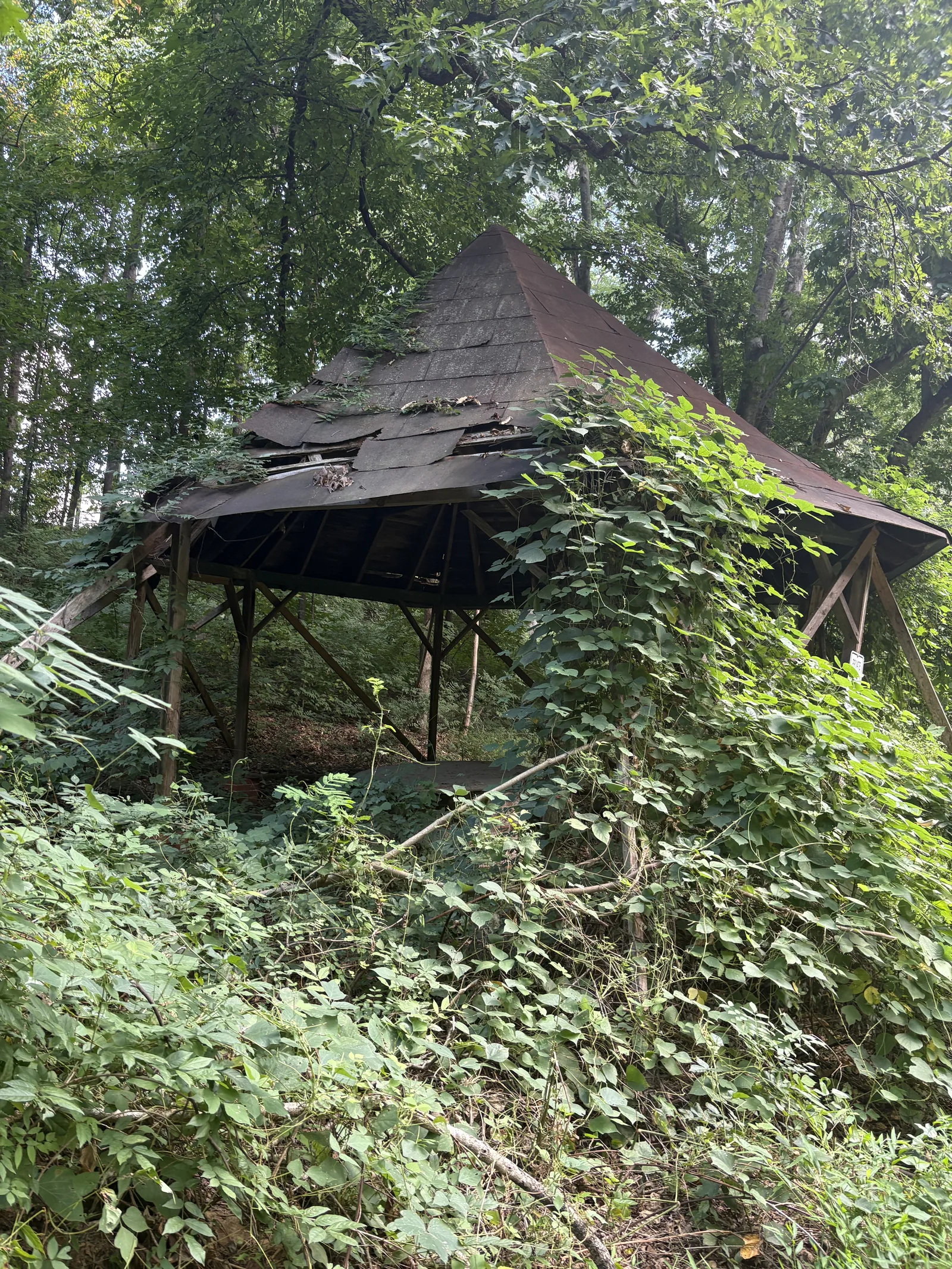
Foundation & Structural Repairin Taylors, SC
The Part We Can't Stop Thinking About
Taylors is two places wearing one zip code.
Down along the Enoree and Mountain Creek it is river-bottom flat. Standing water after a rain, crawlspaces that never fully dry, and rot that starts underneath and works up. Two miles away, toward Paris Mountain, it is as steep as anything we work outside the lake country. Walkout basements, tall foundation walls, and cut-and-fill benches holding back ground they were never engineered for.
Same town, same builders, often the same decade. Completely different failures. Knowing which half of Taylors a house sits in tells us most of what we need before we ever get under it.
We have worked just about every inch of Taylors. It is one of our most covered areas, and between us we have about all lived there at one point or another.
What that gets you is a shortcut. A house near the creek and a house up the hill can be the same age, the same builder and the same floor plan, and they will not fail the same way. We usually know which conversation we are having before we open the crawlspace door.

Why Taylors Homes Move
Taylors sits on the same Piedmont clay as the rest of the county, but almost nowhere in Taylors is the ground flat and ordinary. It is either low and wet or steep and cut, and each one causes something different.
The bottoms
Along the Enoree and Mountain Creek the ground is flat and holds water. Crawlspaces sit in it, standing water after a rain is normal rather than alarming, and the damage is fungal and slow. Encapsulation and drainage do more here than any pier ever will.
The slopes
Toward Paris Mountain the ground gets steep enough that houses sit on benches cut into it. Tall foundation walls carry lateral earth pressure they were never designed for, and erosion works in under footing edges on the downhill side.
Clay
Underneath both, the same shrink-swell clay as everywhere else in the Upstate, moving with the weather wherever drainage is poor.
Two halves, two sets of problems, one town. Neither means a house is unsafe, and both are fixable.
What We See in Taylors, By Era
Taylors is two places wearing one zip code. Down along the Enoree and Mountain Creek it is river-bottom flat and wet. Up toward Paris Mountain it is as steep as anything we work outside the lake country. Which half a house sits in tells us most of what we need to know before we ever get under it.
Not listed? Most homes here still fall into one of these five. Open whichever era matches roughly when your house was built.
Mill Villages and Early Neighborhoods 1890 to 1930
Southern Bleachery village, Taylors Mill
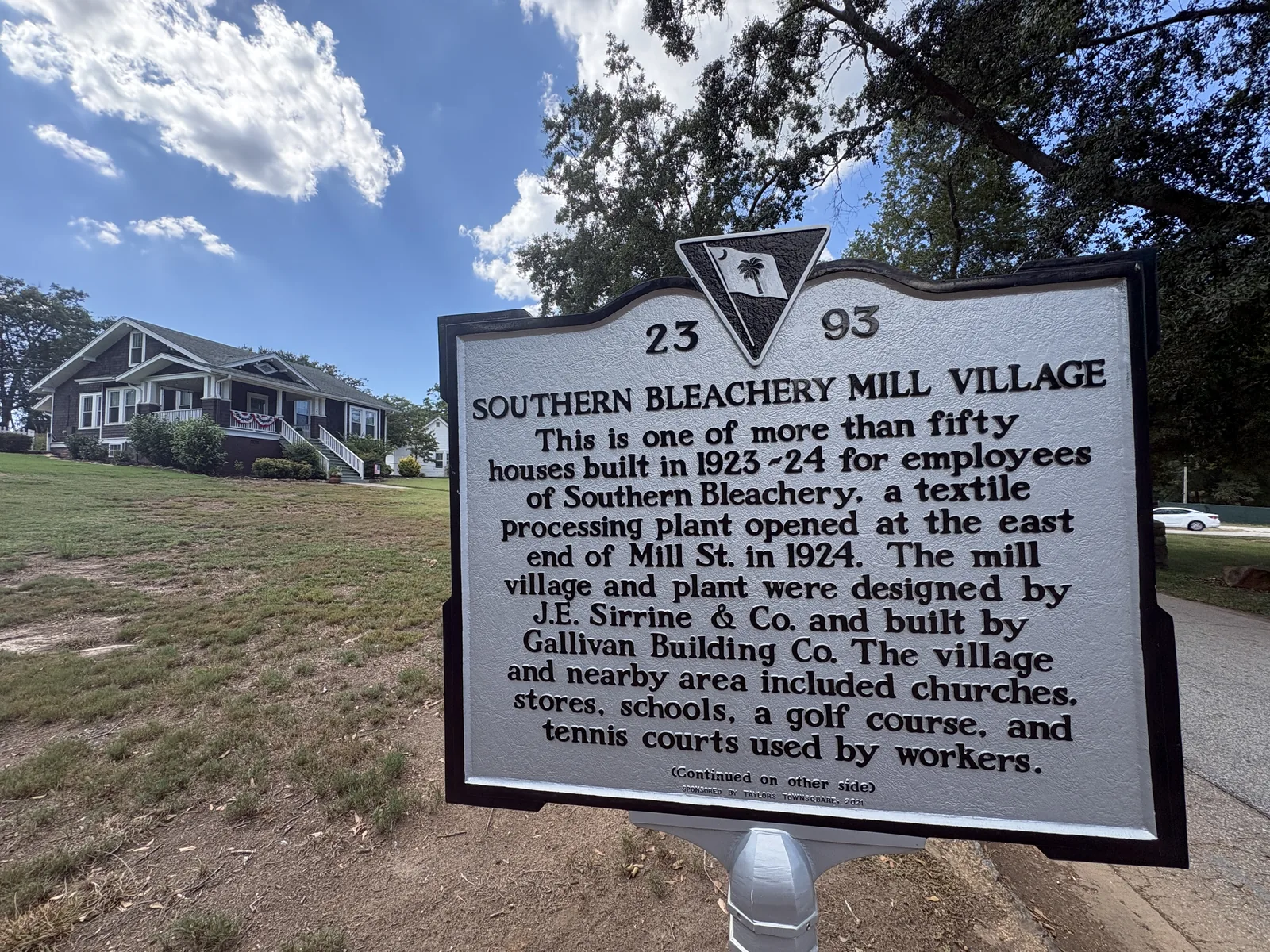
One village rather than several. The Southern Bleachery ran from 1924 to 1965 and its village is true pier and beam: brick piers, shallow or absent footings, framing that was undersized when it was new, and seventy years of owner additions on even less foundation than the original house.
What we usually find
The mill villages were built fast and cheap for mill workers, sold off to those workers in the 1950s, then modified by owners for seventy years with no coordination. The other early neighborhoods on this list were not company built, but they went up the same way and they behave the same way. Structurally they are true pier and beam: isolated brick piers, often with little or no real footing under them, no continuous perimeter wall, and floor framing that was undersized when it was new. We usually find piers that have settled or rotated, joists sistered and shimmed from decades of DIY correction, added rooms and enclosed porches sitting on even shallower foundations than the original house, and bare dirt crawlspaces with no vapor barrier. Termite, powderpost beetle, and rot damage are common in this vintage.
What actually fixes it
Proper footings under new piers, or helical piles where the soil calls for it. Correct girder support. Encapsulation to stop the moisture cycle that caused half the movement in the first place. These houses are almost always worth repairing. The framing is old growth lumber and the bones are better than the piers holding them up.
Pre-War In-Town 1900 to 1940
Chick Springs, Colonial Hills, Drexel Terrace, Lincoln Park
The older stock around the original Taylors Station and the Chick Springs resort grounds, which is where the town centered before the railroad moved it.
What we usually find
Deep crawlspaces, brick or stone perimeter walls, shallow footings by modern standards, and often a partial basement that was dug later. Many of these homes have been renovated two or three times, and each renovation added load the original foundation was never sized for. A second floor addition, a kitchen bump-out, a heavy tile floor. What shows up is differential settlement where an addition meets the original structure, bowing or leaning basement and crawlspace walls, and moisture coming through unsealed masonry.
What actually fixes it
Underpinning at the settled section, carbon fiber or steel reinforcement on walls that have moved laterally, and drainage correction. These are high value homes and the repair has to be done in a way that survives scrutiny at resale.
Postwar Ranches 1946 to 1970
Edwards Forest, Edwards Forest Heights, Brookwood Forest, Oakview, Orchard Acres, Country View, Meadow Farms, Silver Meadows
The hardest working houses in Taylors, and there are a lot of them. Block crawlspaces with interior pier lines, and floors that dip toward the middle where those interior footings were undersized.
What we usually find
Block perimeter crawlspaces on continuous footings, some slab on grade, and the first generation of cut-and-fill lot grading in the Upstate. The construction itself is generally sound. The issue is where the house sits on the lot. Settlement concentrates on the fill side, garage slabs and carports drop away from the structure, and the crawlspace carries sixty years of accumulated moisture damage.
What actually fixes it
Targeted underpinning on the settled quadrant, not the whole perimeter. Most of these houses need work at one corner, not all four. Anyone quoting a full perimeter pier system on a 1960s ranch should be asked to justify it.
Suburban Overflow 1980 to 2005
Pebble Creek, Foxglove at Pebble Creek, Linkside, Hunters Valley, Gray Fox Run, Pheasant Ridge, Moss Creek, Eagles Glen
Pebble Creek and the golf course build-out from the 1970s onward. This is also where the ground starts mattering: the same subdivision can have a flat wet lot and a steep dry one two streets apart.
What we usually find
Block perimeter crawlspaces with interior CMU pier lines carrying a built-up girder, moving to slab on grade toward the end of the era. Volume built on graded pads. The signature problem is interior girder line settlement, meaning floors that slope toward the middle of the house instead of toward the outside walls, because the interior pad footings were undersized and often placed on fill. Add vented crawlspaces with torn or missing vapor barrier, and a downhill perimeter wall taking lateral load it was not designed for.
What actually fixes it
Interior pier and girder support, wall reinforcement where the block has moved, and encapsulation. This vintage is frequently all three in the same visit.
Modern Slab Construction 2000 to today
Blue Ridge Plantation, Lakeside at Blue Ridge Plantation, Seven Oaks at Blue Ridge Plantation, Waters Grove, Hammond Pointe, Stillwaters of Lake Robinson, Townes at Eastside, Townes at Edwards Mill
The Blue Ridge Plantation side and the newer eastside build-out, on graded pads where the flatwork separates before the house does.
What we usually find
Monolithic slab on a mass graded pad. The house slab itself is a stiff plate and usually rides settlement as a unit. The flatwork does not. What we get called for is driveways, garage aprons, front walks, stoops, patios, and porch slabs settling and separating from the house, almost always on the fill side of the lot. Voids under slabs, trip hazards, and water running back toward the foundation.
What actually fixes it
Polyurethane foam lifting. It is fast, it cures in minutes, it does not add meaningful weight to soil that is already consolidating, and the drive is usable the same day. Structural underpinning is rarely warranted on this vintage. If someone proposes it for a settled driveway, get a second opinion.
Further out the Wade Hampton corridor? See our Greer page
Noticing Any of These in Your Taylors Home?
Click any sign to see what causes it and how we fix it. Straight answers, no scare tactics.
Foundation, Crawlspace & Concrete Repair in Taylors
Every one of these is work we do in Taylors. Click a service to see how it works and when your home actually needs it.
Foundation crack repair, settlement stabilization, and pier systems that permanently stop foundation movement.
Foundation solutions →Sagging floor repair, joist and beam replacement, termite and rot damage, and wall separation fixes.
How we re-frame a house →Crawlspace encapsulation, moisture control, and support jack installation under your floors.
Inside a crawlspace repair →Open up your space, give your home a whole new feel with load bearing wall removal.
Opening up a wall safely →Polyjacking lifts sunken driveways, sidewalks, patios, and garage slabs, usually in a single day.
Learn about concrete leveling →Engineered helical piers, push piers, and tiebacks for residential and commercial foundations.
Compare pier systems →How We Fix Taylors Homes
Ordered by what Taylors homes actually need. We do all of it.
What You Should Expect From Us
We'll tell you if you don't need us.
Plenty of cracks are cosmetic or seasonal, and we would rather say so.
We'll show you the cause.
If grading or drainage is driving it, piers alone will not hold.
We'll scope it to the problem.
Most houses need work in one area. A whole-perimeter quote should come with a reason.
What Taylors Homeowners Are Saying
Questions We Get From Taylors Homeowners
How much does foundation and structural repair cost in Taylors?
It depends entirely on what's actually wrong, which is why we don't quote a number over the phone. Your estimate is free, accurate, and the number you'll actually pay.
Do you do crawlspace repair in Taylors?
Yes, and it is most of what we do. Crawlspace repair covers encapsulation, moisture control, and structural repair to the framing above it. Sagging or bouncy floors are almost always a crawlspace job rather than a foundation one.
Do you offer free inspections in Taylors?
Yes, always. No cost, no obligation.
My crawlspace has standing water after every rain. Is that as bad as it looks?
It is worth fixing and it is rarely an emergency. Down in the bottoms along the Enoree and Mountain Creek, water in a crawlspace is the normal condition rather than a warning sign, which is exactly why it gets ignored until the framing above it has gone soft. Drainage and encapsulation solve it, and neither one is a foundation job.
I am up toward Paris Mountain and my basement wall is cracked. Different problem?
Completely different problem. On the hill side the wall is holding back earth and water pressure, not just carrying the house. Carbon fiber holds a wall that has cracked but not moved far, anchors or tiebacks are for one that has, and which you need is a measurement rather than a guess.
The Town That Kept Moving
If you have ever driven around here and thought wait, this is Taylors, you are not alone. Taylors was never sure where it wanted to be either.
It started as a resort. The spring was called Lick Spring long before anyone built on it, named for the deer that came to lick the rocks, and the story goes that Dr. Burwell Chick was hunting deer nearby in 1838 when a neighbor arranged for guides from a village on the Enoree to show him the water. He opened a hotel there in 1840. At the time that resort was most of what existed in the farmland between Greenville and Greer. Chick died in 1847, his sons Pettus and Reuben ran it after him, and by the late 1850s it had been sold on.
Then the town moved. In 1869 Alfred Taylor finished buying up the land that became the heart of Taylors, and a few years later he successfully lobbied to have the railroad run through it. The spur was called Taylor's Turnout, it grew into Taylor's Station, and by the 1880s the center of town had shifted away from Chick Springs entirely.
It moved again in the early 1900s, when Camp Sevier arrived in the First World War and Wade Hampton Boulevard widened into the main road between Greenville and Spartanburg.
Then the mills came. The Southern Bleachery and Print Works opened in 1924, founded by Bennette Geer, a former Furman English professor, backed by James Buchanan Duke's tobacco money and built by the J.E. Sirrine company out of Greenville, the same firm that laid out Poe Mill village. It ran until 1965. You do not have to dig far around here to find a story like that.
Taylors grew after the Second World War into Greenville's largest suburb and resisted incorporation the whole way. It is still unincorporated today. The mill is finding a second life as a destination, and there is work underway to bring Chick Springs back.

Serving the Upstate of South Carolina
Foundation and crawl space repair across twelve counties of the Upstate and beyond. Hover a city to see it on the map. Not listed? Call and ask. If we don't cover you, we'll tell you straight.
We work throughout Greenville County and the surrounding area: Taylors, Greer, Wade Hampton, Pebble Creek, Chick Springs, Paris Mountain, Greenville, Boiling Springs.
Get Your Free Estimate in Taylors
No pressure, no obligation. We'll come look, tell you straight, and give you a number you can trust.