
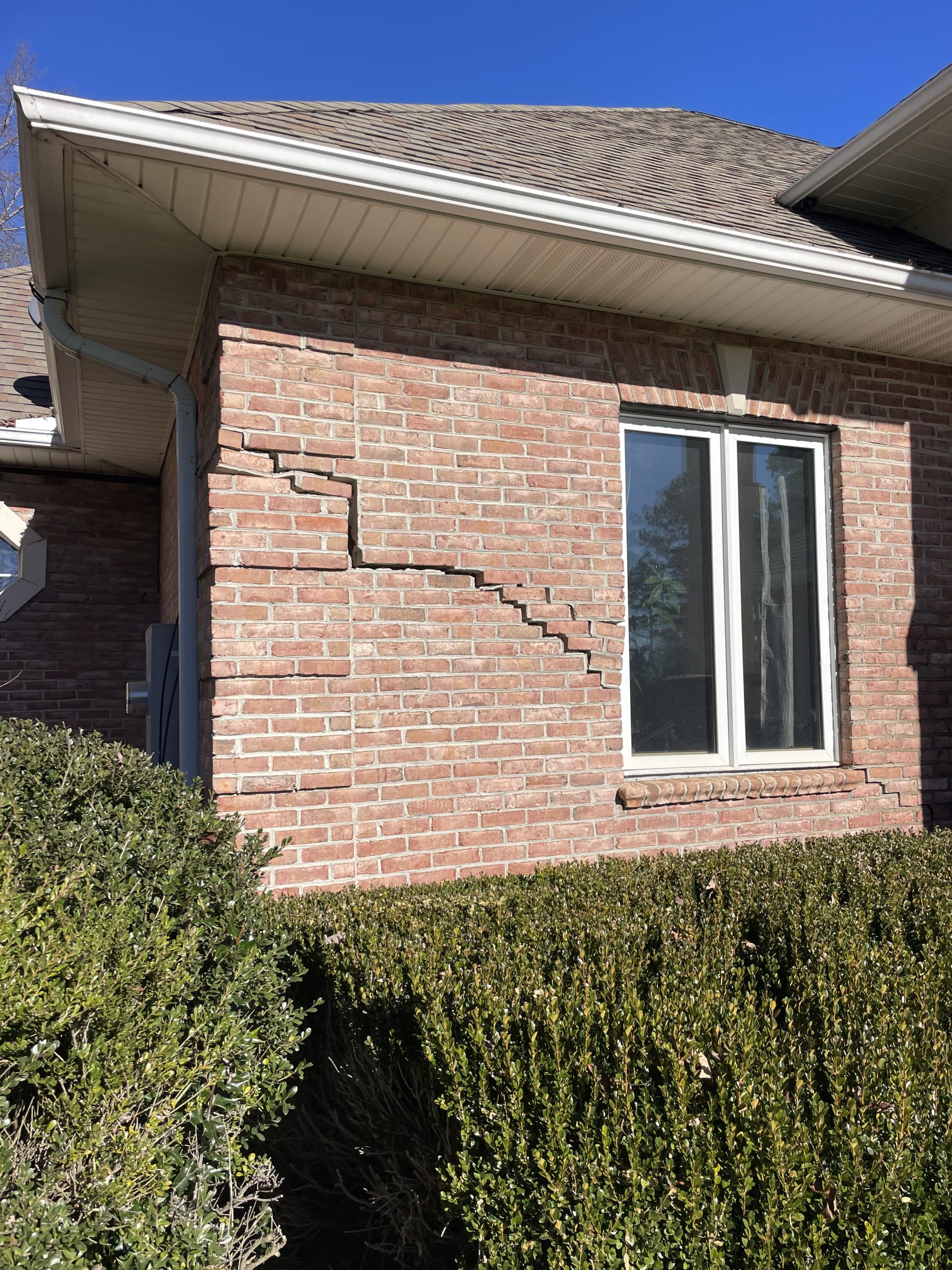
Brick Crack Repair: Stair-Step Cracks and What They Mean
Brick crack repair starts with knowing what the crack means. Cracks in brick are one of the first things homeowners notice, and one of the most misunderstood. Some are cosmetic and only need watching. Others, especially stair-step cracks running through the mortar, are the outside of the house telling you the foundation underneath has moved.
Here’s how to tell the difference, and what the fix looks like for each one.
Get Your Free Estimate
Tell us what you’re seeing. We’ll call to set up a free inspection.
Most Upstate Brick Is a Veneer
On most brick homes in the Upstate, the brick isn’t holding up the house. It’s a single layer of brick, called veneer, built just outside a wood-framed wall and tied to it with metal ties. The brick sits on a ledge of the foundation, and the framing carries the roof and floors.
That matters for two reasons. A cracked veneer usually isn’t about to fall down, so there’s no reason to panic. And because the brick sits directly on the foundation, it’s often the first place foundation movement shows up. Brick doesn’t bend. When the footing under it drops, it cracks.
Some older homes have solid brick walls two or three bricks thick that do carry the load. Cracks in those deserve a closer look sooner. Not sure which you have? Our foundation types page walks through how Upstate homes were built.
Types of Brick Cracks and What They Usually Mean
Where a crack is, which way it runs, and whether it follows the mortar or breaks the brick all tell a story. Here are the patterns we see most.
Hairline Cracks in the Mortar
Fine cracks along the mortar joints, often scattered and not much wider than a hair. Brick and mortar expand and shrink with temperature and moisture, and mortar shrinks as it cures. These are usually cosmetic. Mark the ends and watch them.
Stair-Step Cracks
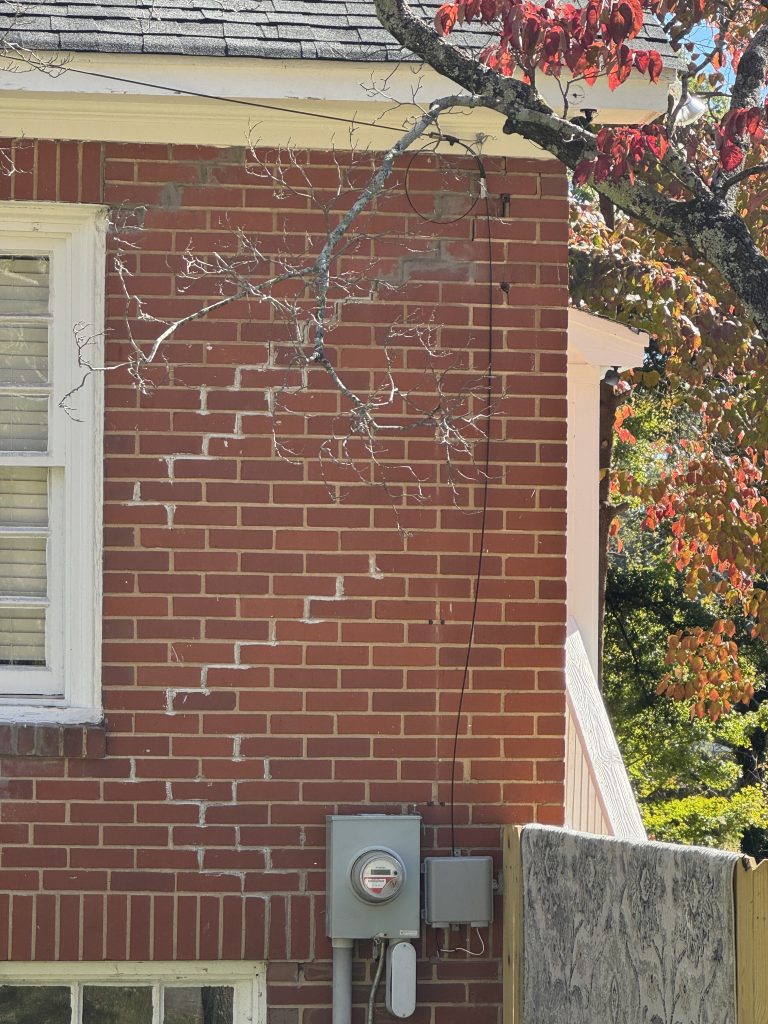
A crack that steps diagonally up or down through the mortar joints, like a staircase. This is the classic sign of differential settlement: one part of the foundation dropping more than the part next to it. They usually start at a corner of the house or the corner of a window or door, and they’re widest where the movement is greatest.
Cracks Through the Brick
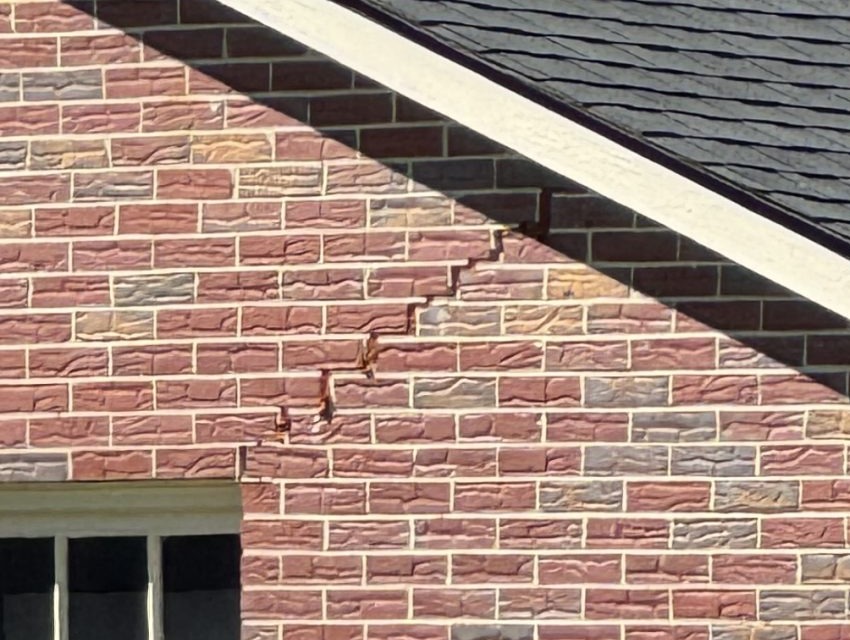
When a crack runs straight through the bricks instead of following the mortar, the force was enough to break the brick itself. That points to more significant movement, or to a specific stress point like a rusting lintel.
Cracks Above Windows and Doors
A crack at the corner above a window or door, sometimes with a sagging brick line or rust staining, is often the steel lintel: the angle iron holding up the brick over the opening. As it rusts, it expands and pushes the brick up and out. That’s a masonry repair, not a foundation problem, and we’ll tell you so.
Horizontal Cracks
In brick veneer, a long horizontal crack can come from a rusting lintel or from movement in the framing behind it. In a solid brick or block foundation wall, a horizontal crack can mean soil pressure pushing the wall in, which is a different problem covered on our bowing and leaning walls page.
Vertical Cracks
A straight vertical crack near a corner or in the middle of a long wall can be thermal movement in a wall built without expansion joints, or one end of the house settling away from the rest. Whether it’s wider at the top or the bottom helps tell us which.
Brick Pulling Away From Windows, Trim, or the House
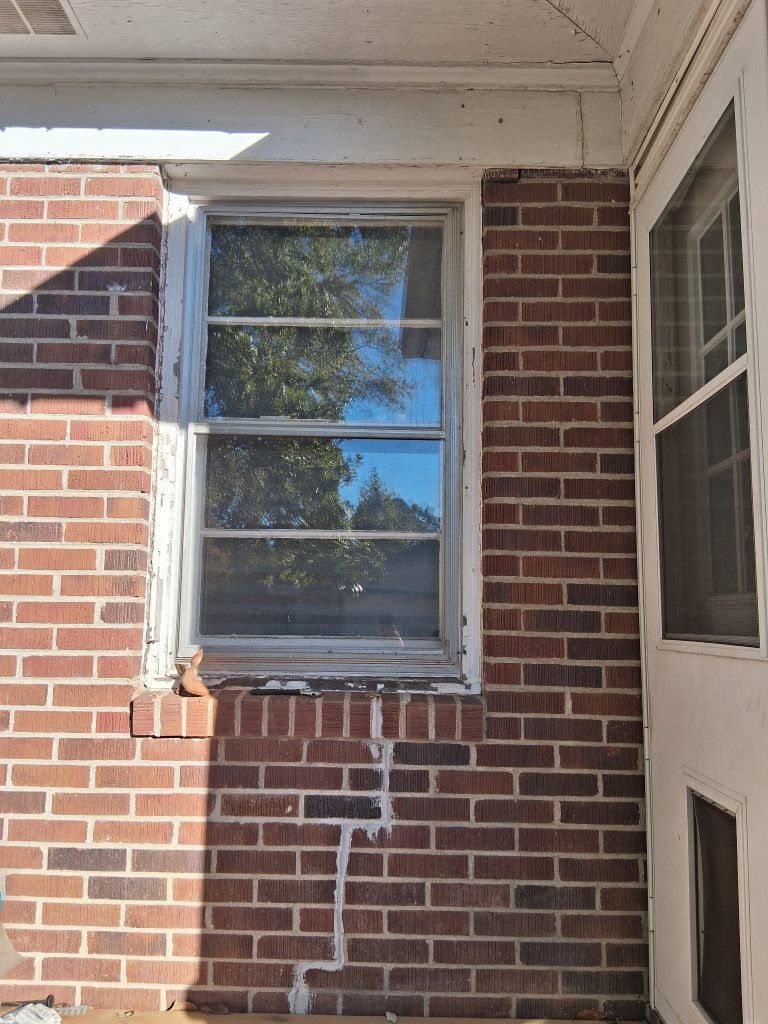
Gaps opening between the brick and window frames, trim, or garage door jambs mean the brick is moving relative to the house. That’s usually settlement, and occasionally failed wall ties.
What Causes Brick to Crack in the Upstate
- Foundation settlement from soft or poorly compacted soil, including fill dirt on sloped lots
- Water at the foundation: downspouts dumping next to the house, poor grading, and clay soil that softens when it stays wet
- Thermal and moisture movement in long walls built without expansion joints
- Rusting steel lintels over windows and doors
- Large trees close to the house drying out and shrinking the soil under the footing
- Original construction: shallow footings, weak mortar, or missing wall ties
When Brick Cracks Are Worth a Closer Look
- Wider than about 1/8 inch
- A stair-step pattern through the mortar
- Getting wider over time
- Running through the bricks, not just the mortar
- Bricks on one side of the crack no longer line up with the other side
- Showing up along with sticking doors or windows, drywall cracks, or sloping floors inside
If none of those fit, the crack is very likely cosmetic. Pencil a mark at each end, write the date next to it, and check back after a season or two. If it hasn’t grown, it probably isn’t going anywhere.
How We Fix Cracked Brick
Stabilize the Foundation First
If settlement is causing the cracks, patching the brick first is wasted money. The crack comes back. We stabilize the footing under the cracked section with steel push piers or helical piles driven down to stable soil. In some cases we can lift that section back toward where it started, which can close the cracks partway.
Then Repair the Brick
Once the movement has stopped, the cracks can be repointed: the damaged mortar ground out and replaced with new mortar matched as closely as possible to the original. Broken bricks get replaced. And if the real problem is a rusted lintel or something else that isn’t the foundation, we’ll tell you that up front, even if it means you need a mason and not us.
Brick Crack Repair FAQs
Are stair-step cracks in brick serious?
They’re worth having looked at. Stair-step cracks are the most common sign that part of the foundation has settled. Many are old and stable, and some are still moving. How wide the crack is, whether it’s growing, and what’s happening inside the house tell us which.
Can I just fill brick cracks with caulk or mortar?
On a stable hairline crack, sealing it can keep water out. But if the foundation is still moving, the patch will crack again, and it can hide the evidence of how much and which way the house moved. Find and fix the cause first.
Does homeowners insurance cover brick cracks from settlement?
Usually not. Most homeowners policies exclude settlement and earth movement, but policies vary, so check yours or ask your agent.
How much does brick crack repair cost?
It depends on the cause. A few stable cracks that only need repointing is a small job. Stabilizing a settling corner with piers is a bigger one, priced mostly by how many piers it takes. See our pricing page for typical ranges, or schedule a free inspection.
Serving the Upstate of South Carolina
Foundation and crawl space repair across twelve counties of the Upstate and beyond. Hover a city to see it on the map. Not listed? Call and ask. If we don't cover you, we'll tell you straight.